
Crawl Space Encapsulation
A damp crawl space can contribute to musty odors, mold growth, and deterioration of wood framing — and because air moves upward through a building, conditions under the floor rarely stay under the floor. Midwest Environmental, Inc. (MEI) provides crawlspace encapsulation and related services to help control moisture and create a cleaner, drier space beneath your home or building.
We have been an environmental remediation contractor in Northwest Ohio and Southeast Michigan for more than 40 years. That means the mold side of a crawl space problem and the moisture side are handled by the same crew, under one scope of work, instead of being split between two contractors.
Signs Your Crawl Space May Have a Moisture Problem
Most property owners never go into their crawl space. These are the things that usually bring us out to look:
- A musty or earthy smell in the rooms above, especially in warm weather or when the HVAC system runs
- Visible mold growth on joists, subflooring, or insulation
- Condensation, damp soil, or standing water on the crawl space floor
- Torn, sagging, or missing vapor barrier — often a thin sheet of plastic laid loose over dirt years ago
- Insulation falling out of the floor joists or hanging down in sections
- Cupping or buckling hardwood floors, or floors that feel cold and damp
- Higher humidity indoors that the air conditioning never quite keeps up with
Our Crawl Space Services
Sealing Vents and Openings
We seal crawlspace vents, gaps, and other unwanted openings to help limit outside moisture and air intrusion. Open vents were once standard practice, but in a humid Midwest summer they can pull warm, moist air into a cool crawl space, where it condenses on framing and ductwork.
Foundation Wall Insulation
We install insulation on foundation walls where needed to help improve temperature control and energy efficiency, and to reduce the temperature difference that drives condensation.
Wall and Floor Vapor Barrier
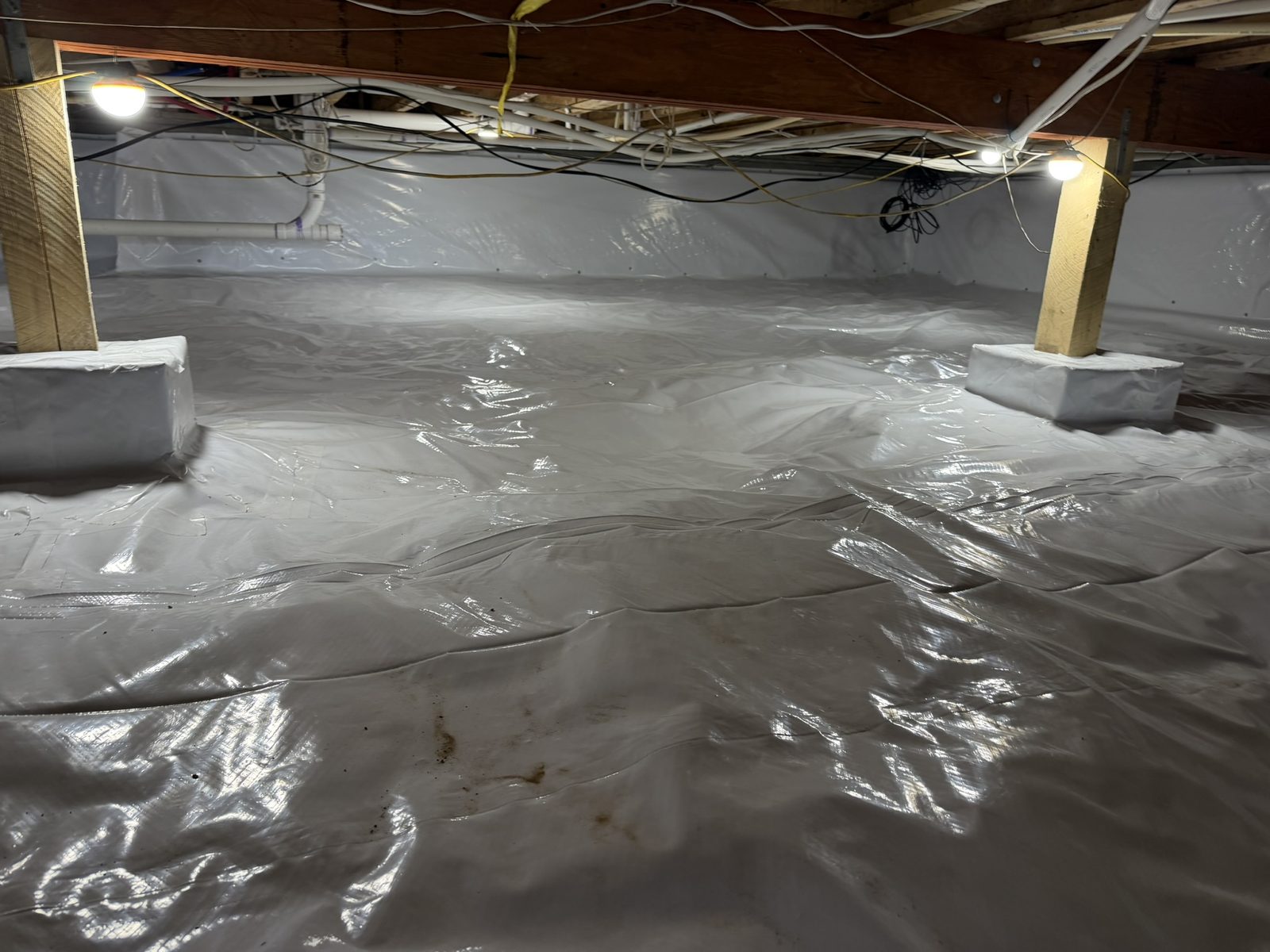
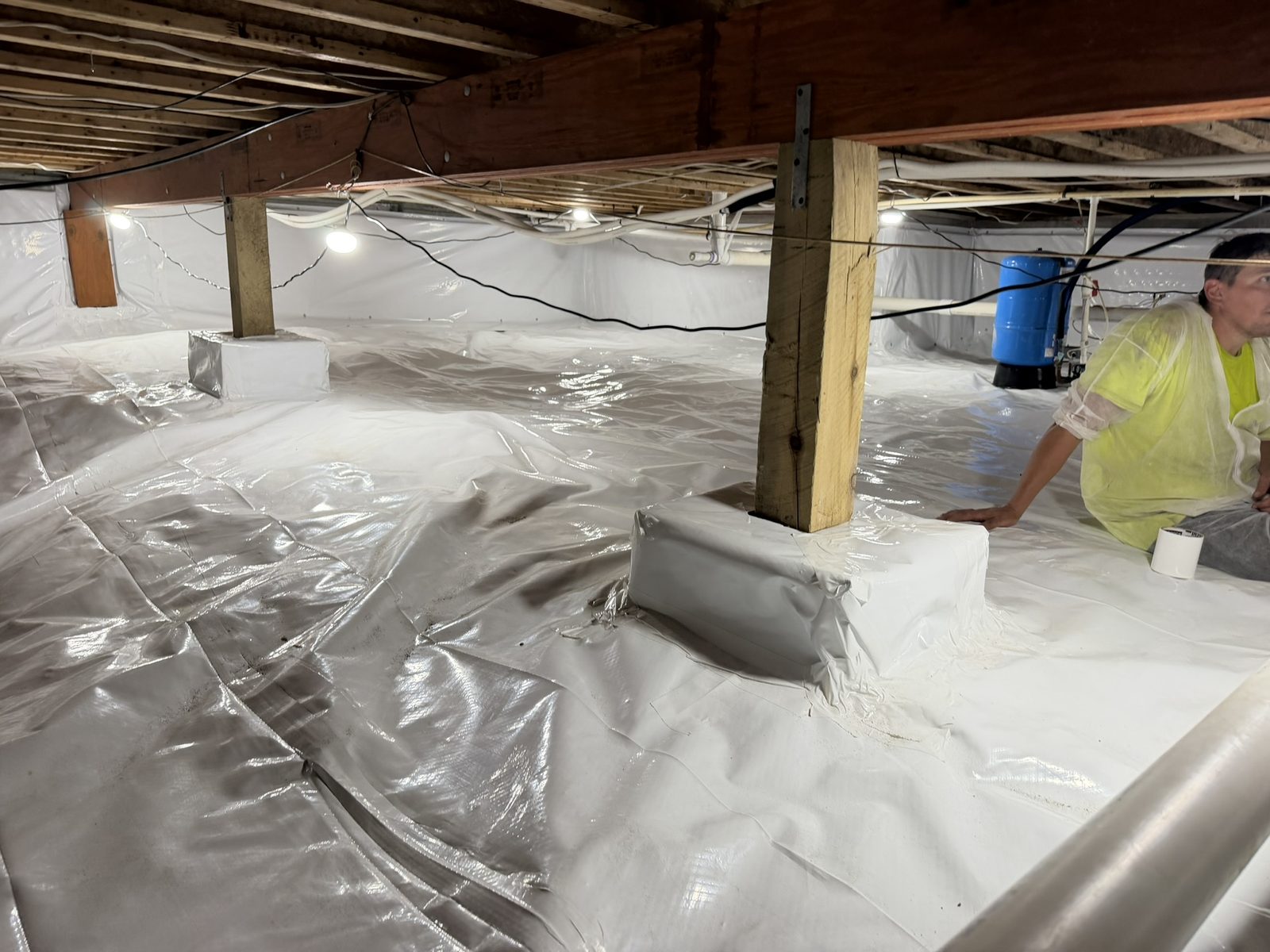
We install durable, 12-mil string-reinforced polyethylene on crawlspace walls and floors, sealing seams and securing edges to create a continuous barrier against ground moisture. String reinforcement is what allows the liner to stand up to foot traffic during future service work — plumbers, HVAC technicians, and pest control all end up down there eventually.
Dehumidifier Installation
We install a crawl space dehumidifier when needed to help manage humidity and maintain drier conditions after the space is sealed, with the unit hung off the floor and set to a target humidity level.
Mold Remediation
We remove and treat existing mold growth on accessible crawl space surfaces when necessary. Encapsulating over active mold growth simply seals it in, so remediation comes first. Learn more about our mold removal and remediation services.
A note on water. Encapsulation manages moisture — it does not replace a repair. Drainage problems, downspouts discharging at the foundation, grading that slopes toward the house, plumbing leaks, or other sources of water intrusion should also be addressed as part of a long-term moisture-control plan. We will tell you what we find, including when the fix belongs to another trade.
Our Crawl Space Encapsulation Process
- Evaluation. We inspect the crawl space and document the conditions — moisture sources, existing barrier, insulation, framing, mold growth, and access.
- Clean-out and remediation. Debris, deteriorated vapor barrier, and fallen insulation are removed, and existing mold growth on accessible surfaces is remediated when necessary.
- Sealing. Vents, gaps, and other unwanted openings are sealed to help limit outside air and moisture intrusion. Foundation wall insulation is installed where needed.
- Vapor barrier installation. Twelve-mil string-reinforced polyethylene is installed across the floor and up the foundation walls, with seams sealed and edges mechanically secured.
- Humidity control and walkthrough. A dehumidifier is installed and set where conditions call for it, and we walk you through the completed work and what to watch for going forward.
Before & After: A Recent MEI Crawl Space Project
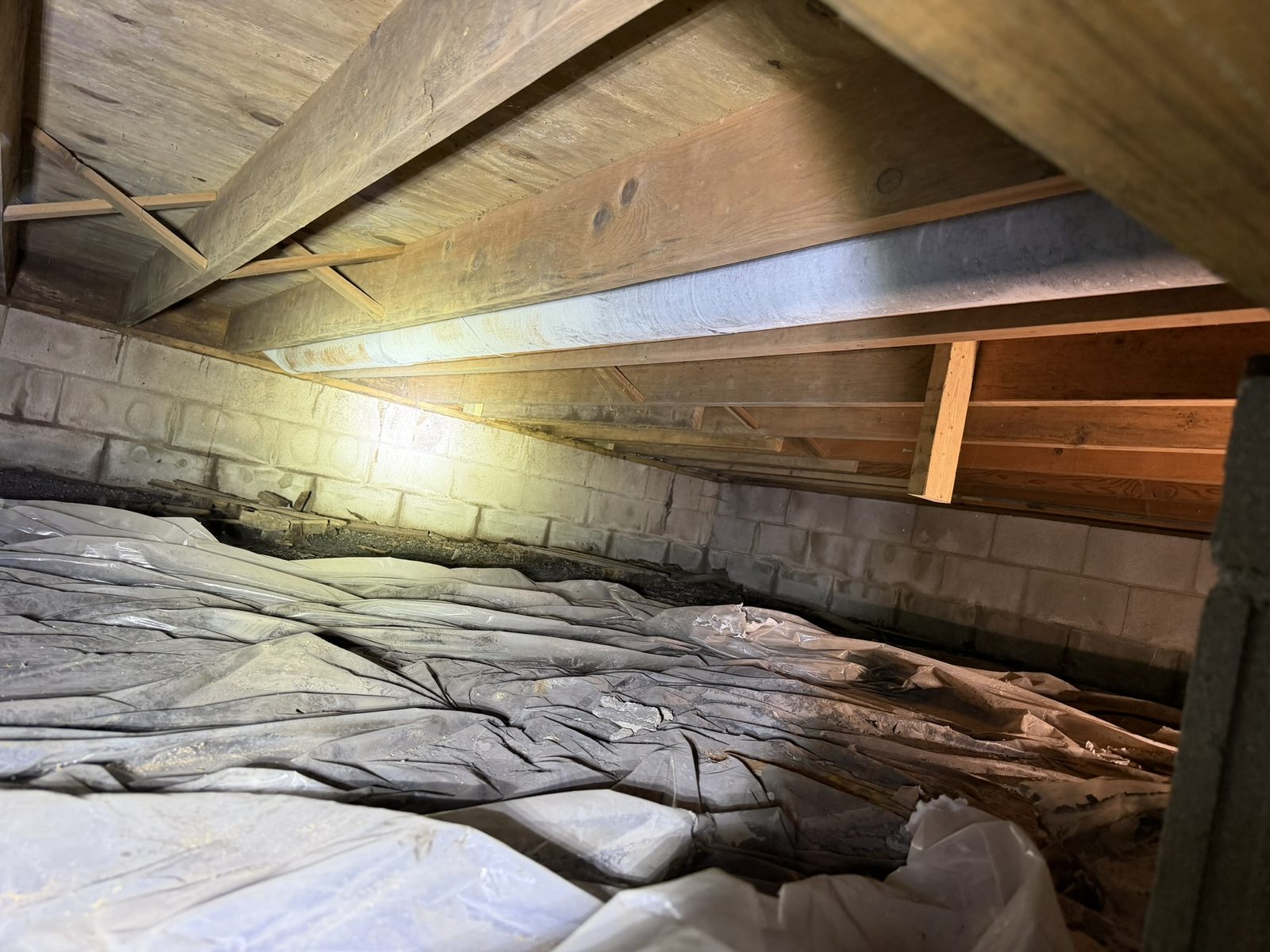
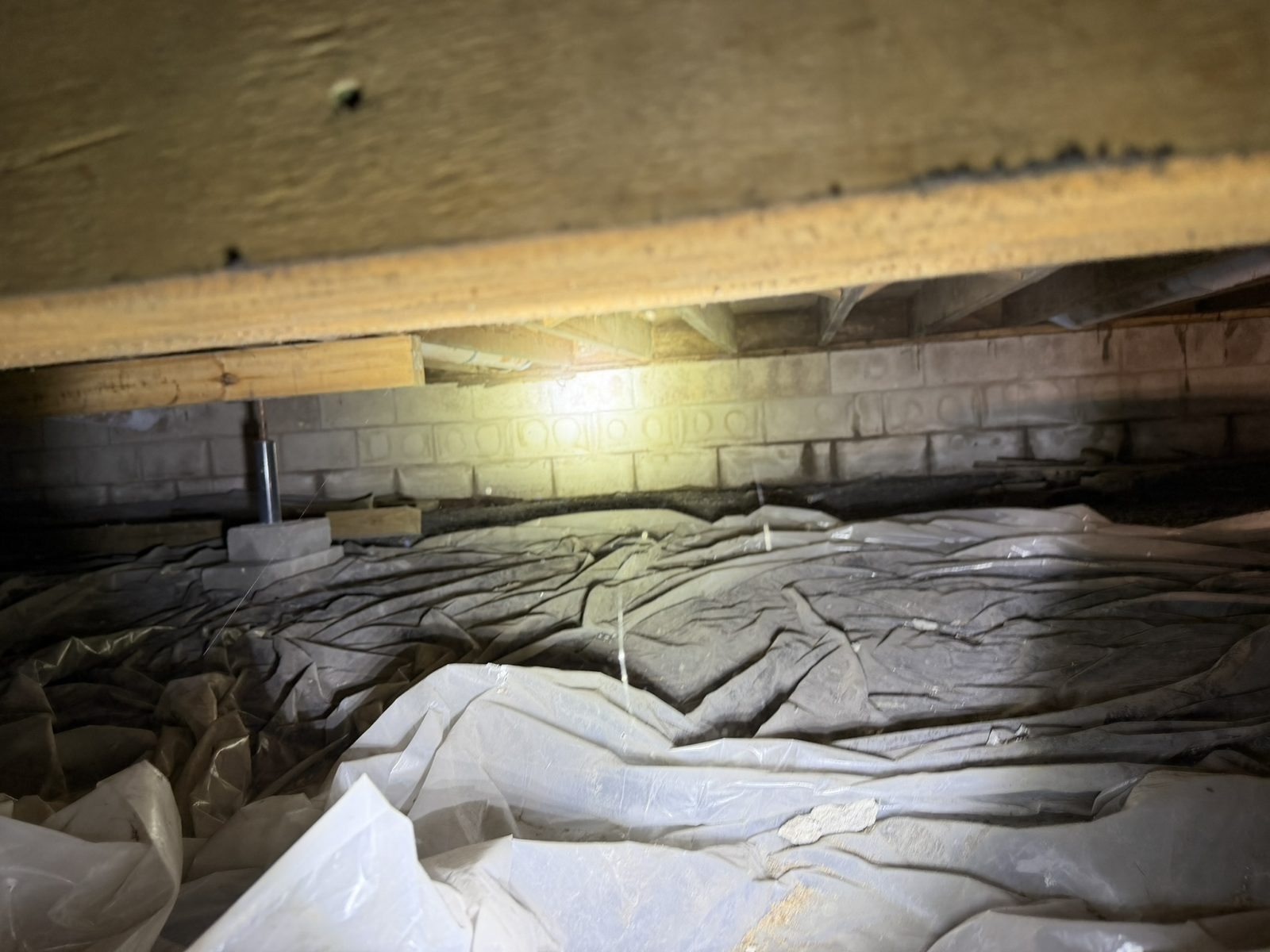
These photographs are from a crawlspace encapsulation project our crews recently completed. The before images show the original condition: bare soil, a deteriorated plastic sheet pulled apart across the floor, and exposed block foundation walls.
Details From the Same Project
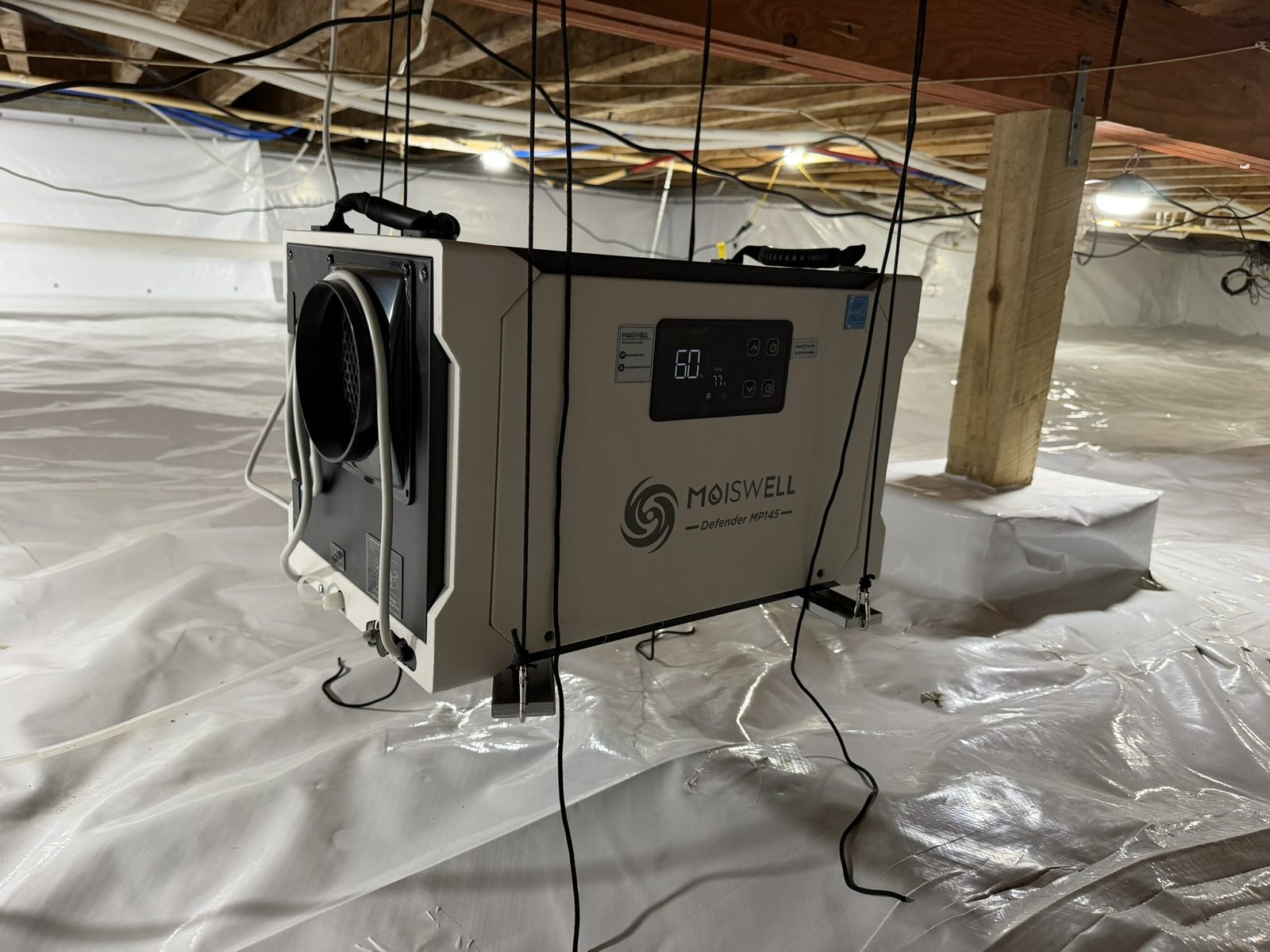
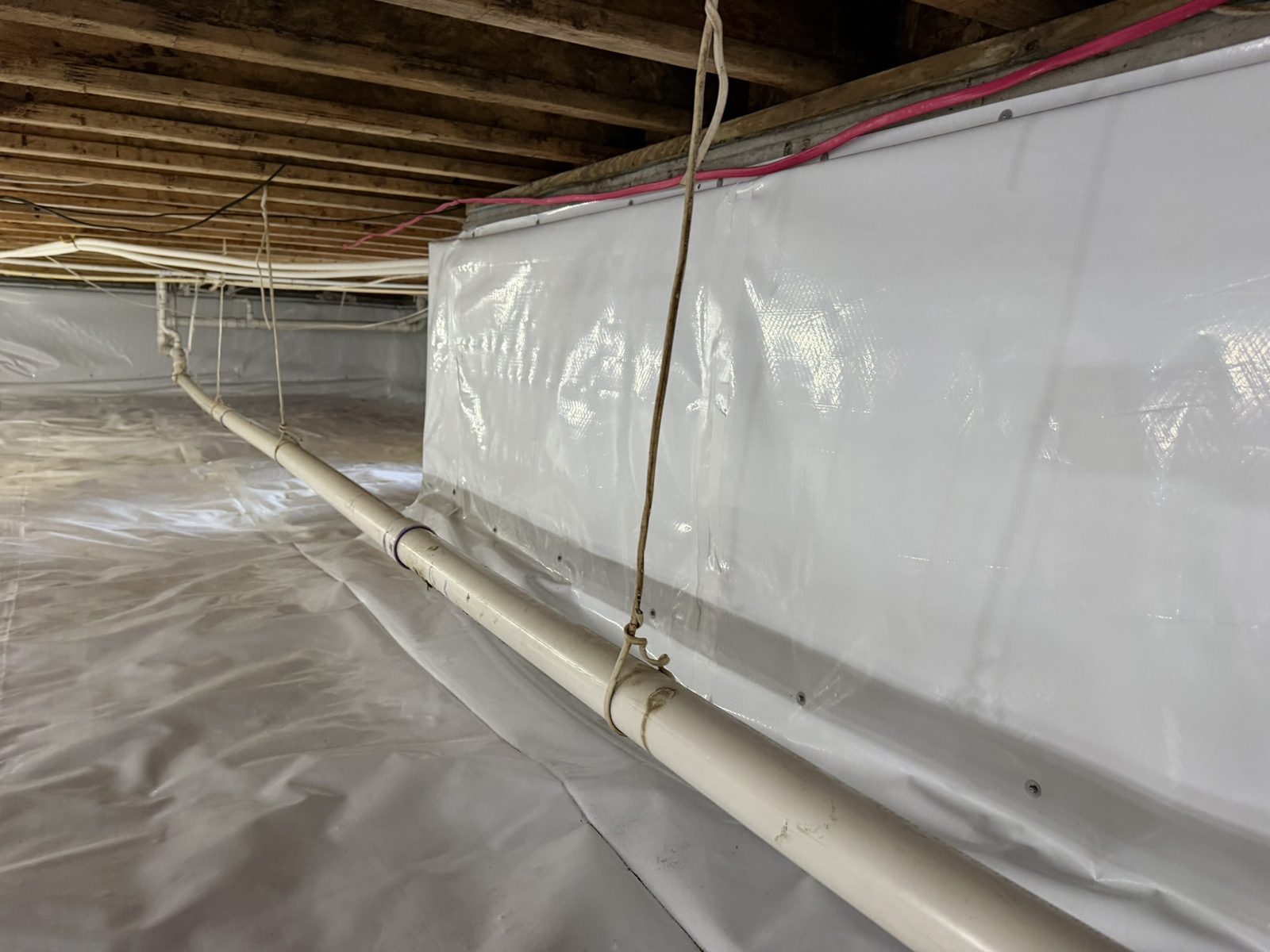
A Plan for Your Crawl Space
Every crawl space is different. MEI will evaluate the conditions and recommend the services appropriate for your space — which may be the full scope, or may be only the two or three items that actually matter in your building. Any drainage problems, plumbing leaks, or other sources of water intrusion should also be addressed as part of a long-term moisture-control plan.
Serving a Wide Range of Clients
- Homeowners & Realtors
- Property Managers & Landlords
- Commercial & Industrial Facilities
- Schools & Public Buildings
- Healthcare & Municipalities
Why Choose Midwest Environmental, Inc.?
- More than 40 years in business in Northwest Ohio and Southeast Michigan
- Remediation contractor, not just an installer. Mold growth and the moisture causing it are handled together, by one crew, under one scope
- Local crews working out of our Perrysburg facility — not a national franchise network
- Straight answers. We will tell you when a crawl space does not need a full encapsulation, and when the real problem is drainage or plumbing
- Written estimates so you know the scope and the cost before work begins
Crawl Space Encapsulation FAQs
What does crawl space encapsulation cost?
It depends on the square footage, the height and accessibility of the space, the condition of what is already down there, and whether mold remediation, insulation, or a dehumidifier are part of the scope. We evaluate the space first and then provide a written estimate — we do not quote crawl spaces sight unseen.
Does mold have to be removed before encapsulating?
If there is active mold growth on accessible surfaces, it should be remediated first. Installing a liner over existing growth seals the problem in rather than resolving it. Because MEI is an environmental remediation contractor, both steps can be handled in the same project.
Will encapsulation stop standing water in my crawl space?
No. A vapor barrier manages ground moisture and humidity; it is not a drainage system. If water is actively entering the crawl space from grading, downspouts, groundwater, or a plumbing leak, that source needs to be corrected as part of the overall plan. We will tell you what we see during the evaluation.
Should crawl space vents be sealed?
In this climate, open vents often work against you. During a humid Midwest summer, outside air brought into a cooler crawl space can condense on framing and ductwork. Sealing the vents and controlling humidity inside the sealed space is generally the more effective approach, and it is what we recommend for most of the crawl spaces we evaluate.
Do I need a dehumidifier after encapsulation?
Not always. Some crawl spaces hold acceptable humidity once they are sealed and the ground moisture is cut off. Others need mechanical dehumidification to stay in a reasonable range year-round. We recommend one when the conditions call for it, rather than by default.
How long does a crawl space encapsulation take?
Most residential crawl spaces are completed in a few days. Projects that include significant mold remediation, heavy clean-out, or difficult access take longer. We will give you a schedule with your estimate.
What areas do you serve?
We work throughout Northwest Ohio and Southeast Michigan from our facility in Perrysburg, Ohio — including Toledo, Bowling Green, Maumee, Sylvania, Findlay, Fremont, Napoleon, Monroe, and the surrounding communities.
Schedule a Crawl Space Evaluation
Concerned about moisture, musty odors, or mold in your crawl space? Contact Midwest Environmental, Inc. to discuss your concerns and request an estimate. Our team will evaluate the space and recommend only the work it actually needs.
Call us at 419-382-9200
Email us at sales@midwestenvironmental.com
Or fill out our online form to request a consultation or quote.
Office Location: 28757 Glenwood Road, Perrysburg, Ohio 43551
419-382-9200 · info@midwestenvironmental.com
Related services: Mold Removal & Remediation · Asbestos Removal · Other Environmental Services